Find the revenue you're delivering but not billing
Billogy compares your network telemetry, CRM and billing systems side-by-side to surface the services running silently, the plans mismatched, and the invoices leaking margin. Read-only. No migration. No production risk.

Zero Migration Required
Read-only analysis alongside your existing billing platform. Nothing to replace, nothing to reconfigure, nothing to break

Continuous Reconciliation
Automated comparison of network, provisioning and billing data. Discrepancies surface before they become recurring losses

Prioritized Recovery
A ranked list of every detected discrepancy with affected subscribers, financial impact and the recommended next step

The Revenue Control Layer for connectivity businesses
Detection Rate
The typical share of revenue Billogy uncovers on a first audit. Measured against your actual data, not an industry average.
Time to First Report
From connecting an agreed data set to the first exception report. No migration, no changes to your production billing.
Audit Granularity
Depending on the available data, discrepancies can be correlated to services, subscribers, ports, MAC addresses, VLANs and other technical identifiers.
Production Impact
Read-only. Nothing written to production systems.
This is how Billogy Works
1
Secure Data Ingestion
Collect the agreed data required to analyze services, subscribers, network infrastructure and billing records.
Sources: Exports, APIs, MCPs, Syslog, IPFIX and SQL, based on environment.
2
Entity & Service Correlation
Correlate subscriber, service, address, technical configuration and pricing data into a unified analytical model.
Engine: Automated Cross-System Matching
3
Discrepancy Detection
Detect active services without correct billing, plan mismatches, expired promotions, and other revenue-impacting discrepancies.
Output: Discrepancy Classification & Potential Root Cause
4
From Detection to Action
Use the audit results to prepare corrections, assign remediation tasks or support further data synchronization.
Action: Billing & Process Remediation Plan
Failed Billing Process
Active but Not Billed
Incorect Invoice Amount
Payment Reconciliation Discrepancy
Speed Upgraded,
Price Not Updated
Duplicated Service
Missed Upgrade Opportunity
Provisioning Without a Commercial Event
Service Active After Contract End
Wrong Plan
Promotion Expired, Price Not Updated
Where Can Revenue Leakage Occur?
Where Usage-Based Infrastructure Bleeds Revenue
Revenue leakage rarely happens from massive catastrophic failures. It happens in thousands of small, unmonitored synchronization gaps between physical provisioning and financial invoicing.
BROADBAND & FTTH
From regional operators to large-scale networks Fiber, broadband and wireless operators Identify revenue discrepancies caused by manual provisioning, incorrect disconnects, unbilled static IPs and synchronization gaps between network infrastructure and billing.
Calix, Nokia, MikroTik, Ubiquiti, Sonar, Splynx, Powercode
Identify and prioritize revenue-impacting discrepancies for verification and remediation.
USAGE-BASED SAAS
Usage-based API, SaaS and infrastructure platforms Usage-based SaaS and cloud GPU platforms Compare API events, token consumption, GPU compute hours, data transfer and other usage metrics against the data used for billing.
Kafka, ClickHouse, Metronome, Stripe, Orb, Lago
Detect missing usage data, dropped batches and potential under-reporting before they become recurring billing issues.
CARRIER TELECOM
Network, backbone and wholesale operators Telecom & IP Transit Carriers Compare usage, SLA commitments, interconnects and usage-based billing data to identify discrepancies across your network and commercial systems.
Juniper, Cisco, Ciena, NetFlow, Amdocs, CSG, Oracle
More reliable usage reconciliation and wholesale billing verification.
DATA CENTERS
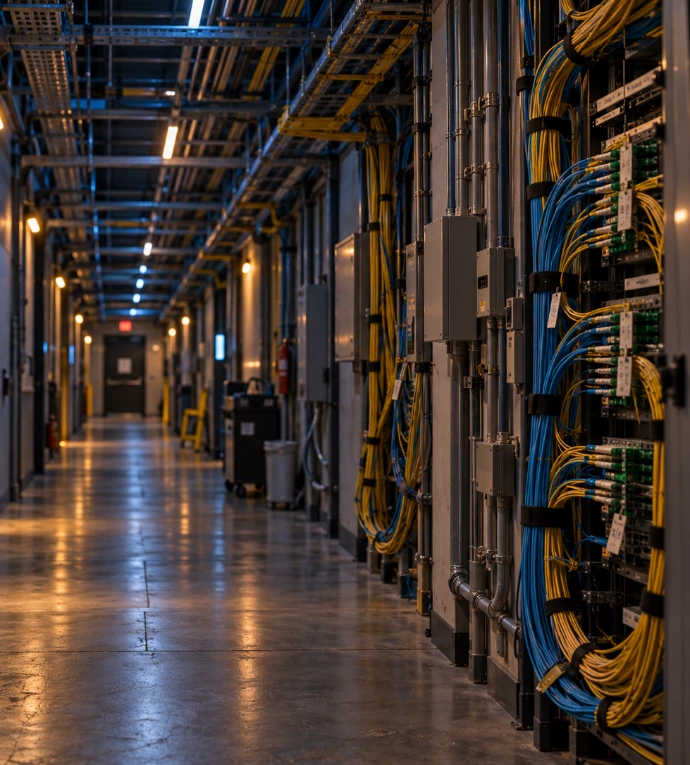
Data centers and bare-metal providers Data Centers & Bare-Metal Hosting Analyze power usage, rack cross-connects, bandwidth commitments and IP allocations to identify resources that may not be correctly reflected in the billing.
Raritan, SNMP, WHMCS, Ubersmith
Identify unbilled or inconsistently recorded infrastructure resources
Frequently asked questions
Everything you need to know about analyzing network, CRM and billing data with Billogy.
No. Billogy is designed as an analytical layer that works alongside your existing environment. An audit does not require migration of your current billing platform.
The audit can be performed using agreed data exports and/or read-only access, depending on the environment. The objective is to identify discrepancies without making changes to production systems.
We first identify the relevant data sources. You then provide the agreed data through an export or integration. Billogy correlates the data, identifies potential discrepancies and produces an actionable list for verification.
It depends on the number and value of discrepancies identified and how quickly they are remediated. The initial audit is designed to establish whether a measurable revenue leakage problem exists and where it occurs.